
Five for Ruins
Three unfinished churches, three stories about what gets in the way of faith

I have always had a fascination with ruins, especially of massive architectural buildings. I think they have an aesthetic all their own, and the ruined form sometimes highlights aspects of the structural design more vividly than a polished, finished building ever could. There is something about the raw look of ruins that draws me in. And of course, the unfinished state was never the plan, but it turns out to sometimes produce better results than the plan would have.
Many ruins are preserved deliberately. Some become museums. Others serve as venues for concerts, weddings, theater performances. They keep a function, even in their brokenness.
Ruins also tell a story. They are ramparts of history. If walls could talk, people sometimes say. If ruins could talk!
In this piece, I want to highlight three ruins of church buildings on the Latin American continent that inspire me, and to which I also have a personal connection. But they also tell a story about various dimensions of religious freedom.
The Templo Inconcluso, Mascota, Jalisco
The first ruin is the unfinished temple of the Preciosa Sangre in Mascota, Jalisco. Construction began in 1897 in a town that today is recognized as a Pueblo Mágico, nestled in the Sierra Madre Occidental between Guadalajara and Puerto Vallarta. The builders worked entirely by hand, raising columns and arches from local stone. Work slowed with the onset of the Mexican Revolution in 1910 and stopped entirely with the Cristero War of the late 1920s, when Jalisco became the epicenter of a brutal anticlerical campaign aimed at nothing less than the elimination of Catholicism from Mexican public life. The ironwork for the roof never arrived. The walls never joined. And there they stand, open to the sky.
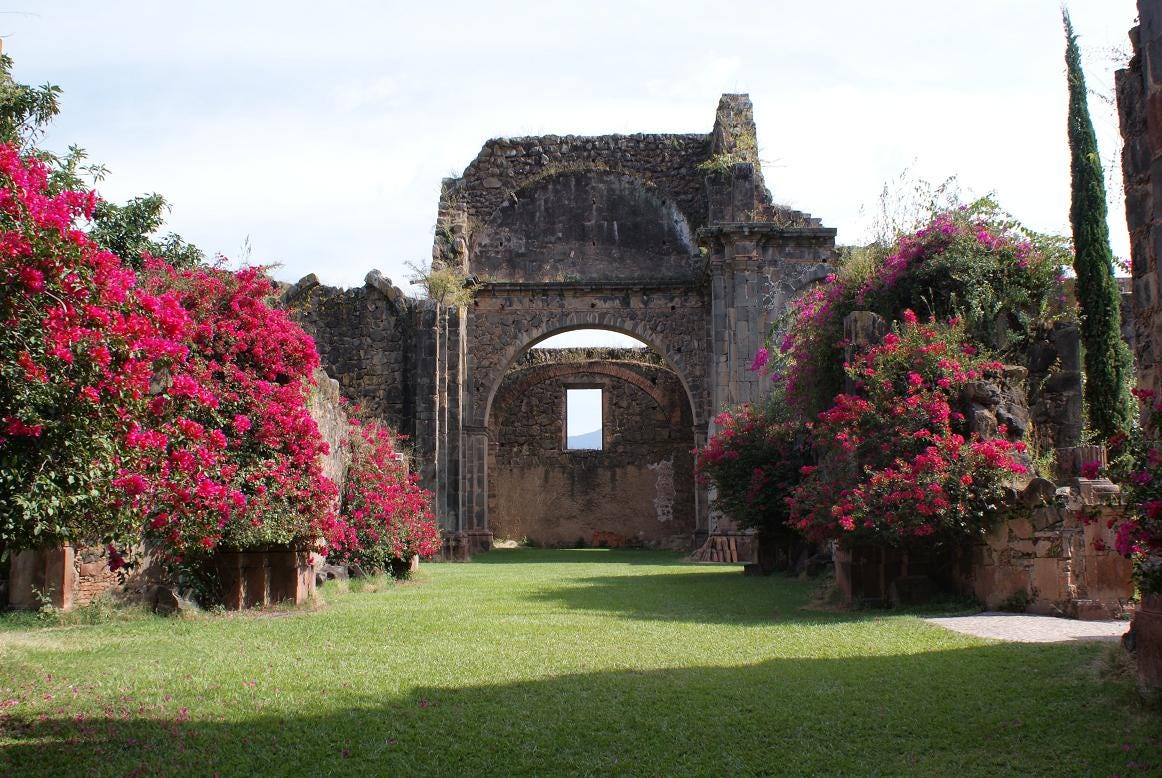
Photo: Wiper México, CC BY-SA 3.0
You will see beautiful cathedrals all around Mexico, but most of them date from before that era. What makes Mascota unusual is that the ruin itself is the evidence. It did not get destroyed; it simply never got to become what it was meant to be, because the state decided that it should not exist.
Few authors have grasped that persecution phase as well as Graham Greene in The Power and the Glory, the story, which is set in Tabasco, on the other side of Mexico, of a priest who happens also to be a drunk and a father, pursued by a lieutenant who believes he is doing something good. Greene understood that the Mexican anticlerical campaign was not just a policy, it was a worldview, and it had real victims.
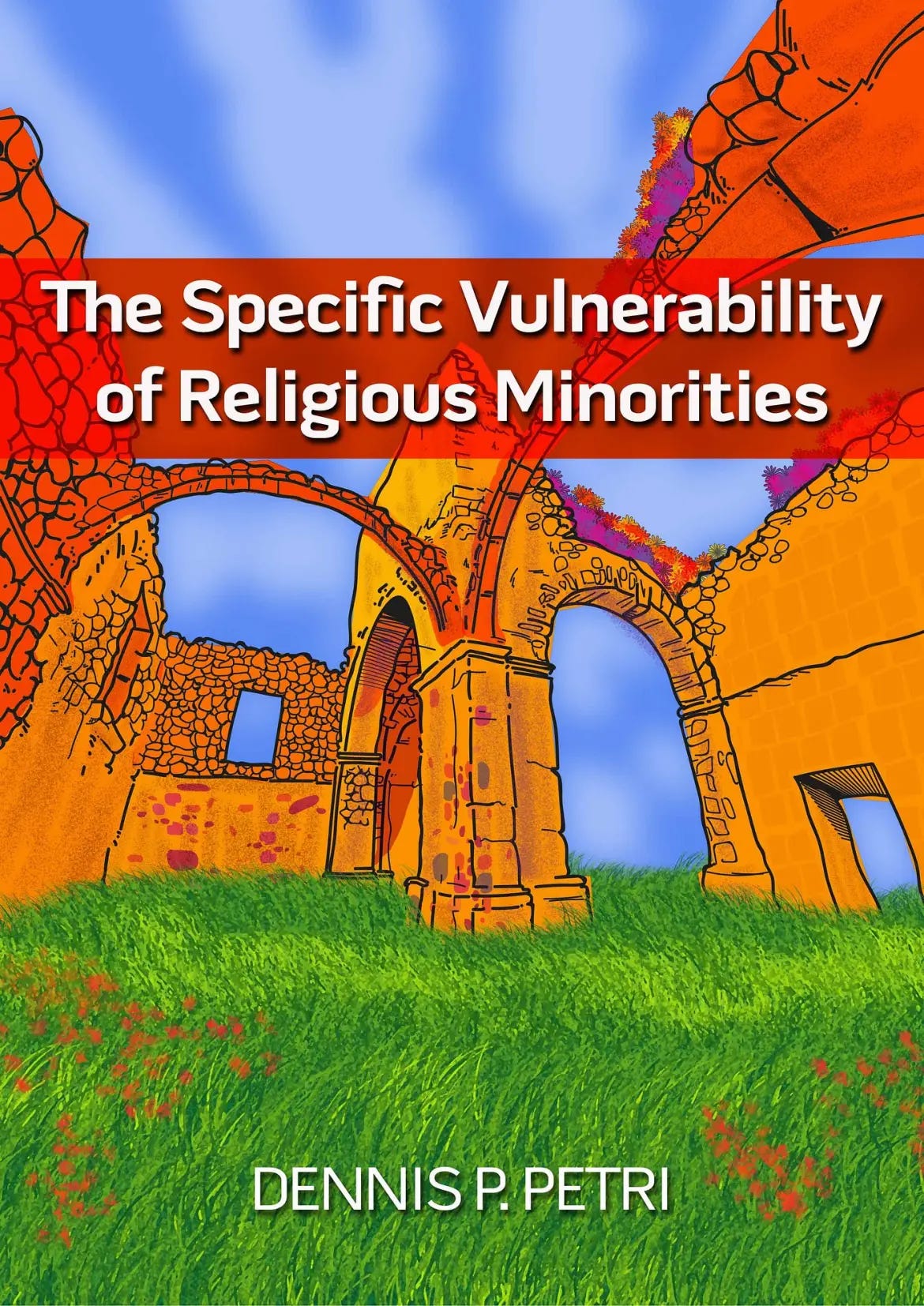
I used the Mascota temple as the cover photograph on The Specific Vulnerability of Religious Minorities, the book that came out of my doctoral dissertation. It was my answer to those who too quickly dismiss Latin America as a continent without serious religious persecution. The image is visually arresting, but it is also historically precise. It also appears on the website of the Observatory of Religious Freedom in Latin America, which I founded in 2017.
San Ignacio Miní, Misiones, Argentina
The second ruin is San Ignacio Miní, in the province of Misiones, Argentina, today a UNESCO World Heritage Site and museum. The mission was originally founded around 1610 and eventually settled at its current location in 1696, after repeated forced relocations. At its peak it housed around 3,000 people, mostly Guaraní, who built instruments, produced crafts, farmed, and created what was by most accounts a functioning, relatively self-sufficient community. The church alone was 74 meters long, its facade carved in a unique blend of European Baroque and Guaraní artistic tradition.
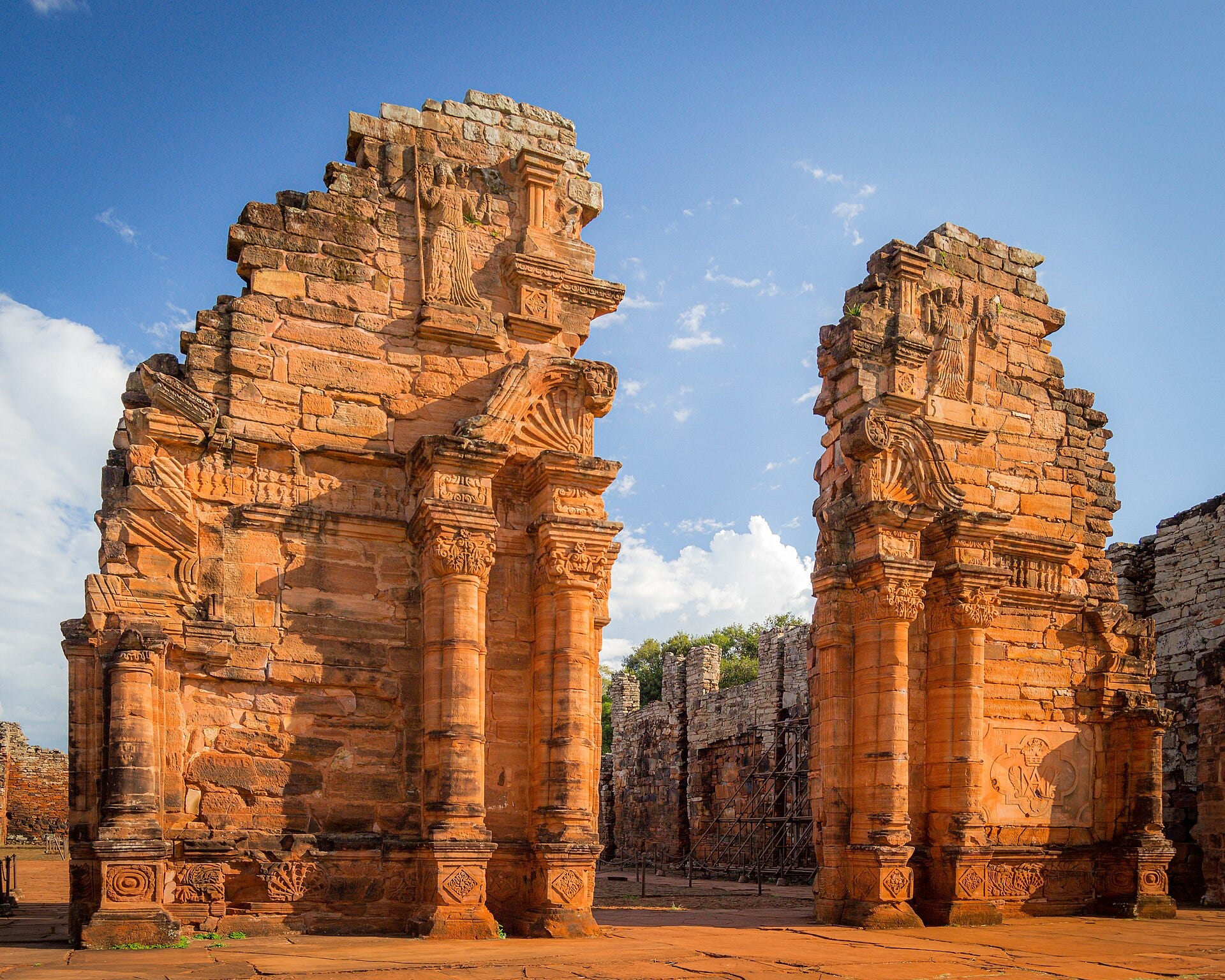
Photo: Fernando, CC BY-SA 4.0

The story of what ended it is layered. Throughout the seventeenth century, the missions were relentlessly raided by the Bandeirantes, slave traders from the region that is now São Paulo, who came looking for labor. The community had to defend itself and eventually relocate. Then in 1767, the Spanish Crown expelled the Jesuit order from its American territories, and the missions were abandoned. Without the Jesuits, the community collapsed. In 1817, Luso-Brazilian forces destroyed what remained.
This is a useful illustration of something that matters for how we think about religious freedom today. In Latin America, the threats to religious practice are increasingly not coming from official state policy but from criminal actors, armed groups, and community-level coercion. The Misiones story, in some ways, anticipated that pattern by centuries.
I picked a photograph of San Ignacio Miní for the cover of The Routledge Handbook of Religion and Politics in Latin America, which I am editing and which is due out later this year.
Las Ruinas de Cartago, Costa Rica
Finally, there are the ruins of Cartago, Costa Rica’s first capital, where I lived for over a decade.
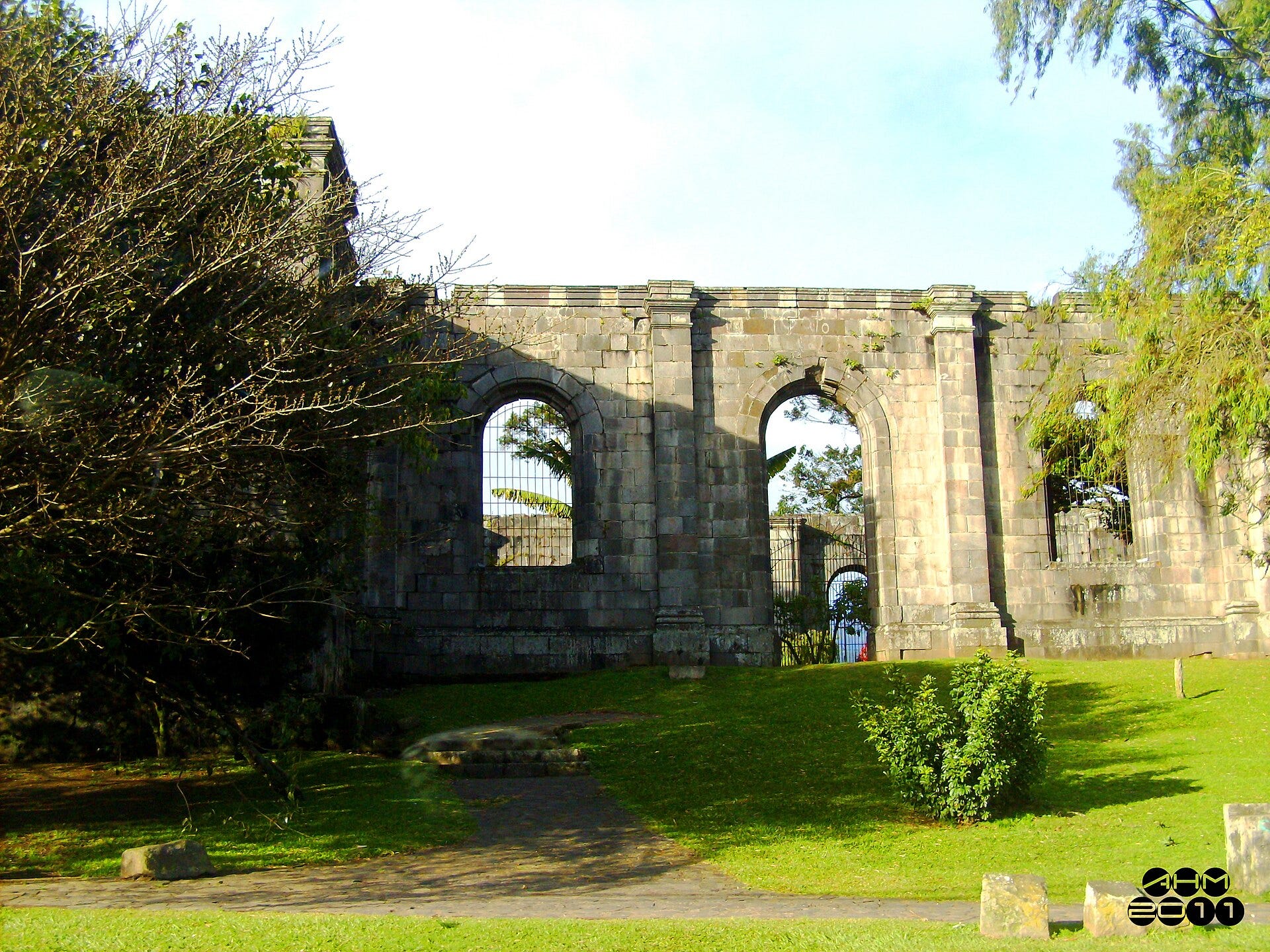
Photo: Peloy (Allan H.M.), CC BY-SA 3.0
The site dates to 1575, when a parish church dedicated to Santiago Apóstol was first built there. What followed is a story of repeated destruction and reconstruction. An earthquake in 1630 brought down the original structure. It was rebuilt, then damaged again, then rebuilt again. In 1841 a major earthquake destroyed it completely. A new attempt was made in the 1860s, with a design by a German architect, Francisco Kurtze, working in a Roman architectural style that remains to this day the only example of that style in Costa Rica. That structure, too, was approaching completion when the Santa Monica earthquake of May 4, 1910, the worst in Costa Rican history, brought it down once more. By then, people had stopped trying. The local government wanted to demolish the remnants entirely, but the Catholic Church opposed it, and the structure was left as it stood.
The ruins became a public garden, a park, one of the most photographed spots in the province. They also became wrapped in legend, cursed ground, haunted by the ghost of a headless priest, a place where God’s wrath had expressed itself repeatedly and specifically.
The ruins have become a symbol of Cartago, much to the dislike of a prosperity gospel preacher whose sermon I once heard, who argued that ruins should never be a city’s symbol if it wants to be wealthy, and that Cartago ought to pick a more powerful positive thinking visualization tool.
And in this case, unlike the other two, there is no persecution story. No state campaign against the church. No raiders or slave traders. Just earthquakes. A broken creation, doing what broken creation does.
That distinction matters. Not everything that causes suffering to religious communities is a religious freedom violation. Sometimes tectonic plates shift. That does not make the suffering less real, and it does not make the question of what to do with the remains less significant.
The Beauty That Persists
What I find compelling across all three of these places is something that only appears in the ruin form. The finished cathedral can be magnificent, but it answers the question. The ruin leaves it open. The Preciosa Sangre in Mascota asks: what would this have been, if the state had not decided to erase the people who were building it? San Ignacio Miní asks: what does a community look like when it is allowed to function on its own terms, and what happens when that permission is revoked? The ruins of Cartago ask something quieter but perhaps more universal: what do you do when the world keeps breaking what you are trying to build?
Ruins are honest in a way that finished buildings are not. They show the stress points. They show what held and what did not. Sometimes the stress came from the outside, from a government that wanted the faith gone. Sometimes from raiders who wanted the people as slaves. Sometimes from the ground itself, indifferent.
The three ruins are iconic, aesthetic, and powerful message carriers. And the deep philosophical truth that they share is that suffering, whatever its origin, can lead to beautiful things. Not because suffering is good, but because people make meaning out of what remains.